
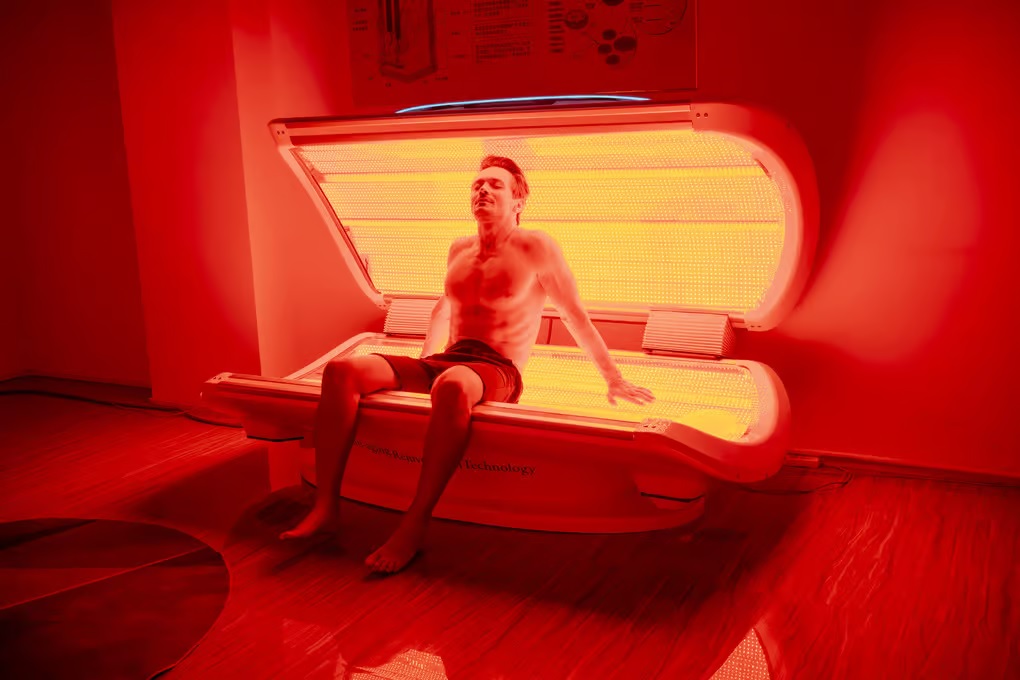

Bangkok doesn’t exhaust you in obvious ways. It doesn’t announce itself as burnout. It just slowly pulls energy from your nervous system—through noise, heat, screens, deadlines, and nights that never quite go dark. You can sleep eight hours here and still wake up tired. That’s why the wellness conversation has shifted. People aren’t chasing hacks anymore, they’re looking for systems that restore what the city constantly takes. Red light therapy didn’t rise because it’s trendy. It rose because it works without asking the body to work harder.
1. Energy, Not Stimulation — Fixing the Problem at Cell Level
Most “energy solutions” borrow from tomorrow. Coffee, pre-workouts, supplements—they stimulate, then demand repayment. However, professional red light therapy in Bangkok does the opposite; it gives cells what they’ve been missing. Instead of chemical stimulation, you receive biological restoration.
Here’s why serious people pay attention:
Ø Specific wavelengths (660nm and 850nm) reach mitochondria directly
Ø ATP production increases without digestion or adrenal stress
Ø Fatigue is resolved at the source, not overridden
In a city that never powers down, your cells quietly fall behind. Photobiomodulation clears the congestion inside mitochondria so oxygen can do its job again. No spike. No crash. For founders, athletes, and professionals who can’t afford “off days,” this isn’t wellness—it’s infrastructure.
2. Skin That Recovers, Not Just Looks Better
In Bangkok, skin damage isn’t dramatic—it’s cumulative. UV, pollution, humidity, inflammation. Sunscreen is defense. Creams are maintenance. Neither repair what’s already happened.
Red light therapy plays a different role:
Ø Encourages DNA repair after unavoidable sun exposure
Ø Reduces chronic, invisible inflammation
Ø Strengthens skin structure from beneath the surface
The difference is precision. High-level providers stack wavelengths:
Ø 660nm works at the surface—collagen, tone, repair
Ø 850nm penetrates deeper—supporting the dermal framework
This isn’t about aesthetics. It’s about resilience. Skin that adapts instead of constantly reacting. In the tropics, that distinction matters more than any “anti-ageing” claim.
3. When Technology Helps — and When It Hurts
As red light therapy grows, so does imitation. Red lights everywhere. Panels that glow but don’t deliver. Wellness theatre.
Experienced users know what actually matters:
Ø Minimum 100mW/cm² irradiance at working distance
Ø Low-EMF, medical-grade panels
Ø FDA-cleared or TGA-listed equipment
Bangkok already floods your system with electromagnetic noise. Adding cheap, high-EMF devices doesn’t heal—it compounds stress. Real systems deliver stable wavelengths, zero flicker, and clean output. For investors and operators, this is where credibility is built or lost. Biology doesn’t care about branding. It responds only to physics done properly.
4. Sleep Repair in a City That Refuses to Dim
Bangkok’s real sleep problem isn’t insomnia—it’s light. Malls, phones, traffic, LEDs. Melatonin never gets a clear signal.
Red light therapy helps by:
Ø Priming melatonin naturally, without pills
Ø Supporting circadian rhythm alignment
Ø Reducing dependency on sleep aids
But timing is everything. The best centers don’t just offer sessions—they design environments. After 6 PM. Dim rooms. Blackout conditions. Red light in a fluorescent-lit space is a contradiction. When done right, it tells your brain: the day is over, even if Sukhumvit lifestyle says otherwise. For travelers and night-shift professionals, this becomes recovery without sedation.
In essence, red light therapy didn’t become popular in Bangkok because people wanted another wellness toy. It became essential because the environment demands smarter recovery. The future of biohacking in Thailand belongs to those who respect biology, understand context, and apply technology with restraint. When expertise leads, wellness stops feeling like effort—and starts functioning like balance.